
Shock
Shock is a critical condition where blood flow and oxygen delivery to tissues are dangerously reduced.
Bleeding
Bleeding is the loss of blood from the circulatory system due to injury or rupture.
Shock is a life-threatening condition that occurs when the circulatory system fails, depriving vital organs like the heart and brain of oxygen. Immediate emergency care is essential. Shock can worsen due to pain and fear, so keeping the casualty calm and comfortable is crucial.
Recognition
- Early signs:
- • Fast pulse
- • Pale, cold, and sweaty skin
- As shock progresses:
- • Weak, rapid breathing
- • A faint, slow pulse (wrist pulse disappears when half the blood is lost)
- • Bluish-gray skin, especially inside the lips
- • Dizziness, nausea, and vomiting
- • Extreme thirst
- When oxygen supply to the brain decreases:
- • Restlessness and confusion
- • Yawning or gasping for air
- • Loss of consciousness
- • Heart stops beating (final stage)
What to Do
Warning!
Bleeding is the process where blood escapes from the blood vessels due to an injury or damage. It can occur from cuts, crush injuries, or even nosebleeds. When the skin or blood vessels are damaged, blood flows out, and the body works to stop it by forming clots.
- What to do
- 1️⃣ Release the Casualty (If Possible & Safe)
- If the casualty has been crushed for less than 15 minutes, release them as quickly as possible.
- Control bleeding, support fractures, and treat for shock.
- 2️⃣ Do Not Move if Crushed for Over 15 Minutes
- If the casualty has been crushed for more than 15 minutes, do not release them.
- Keep them comfortable and reassured while waiting for help.
- 3️⃣ Call for Emergency Help
- Dial 112 and provide clear details about the incident.
- 4️⃣ Monitor & Record Vital Signs
- Keep track of breathing, pulse, and level of response until emergency services arrive.
- Warning!
- 🚫 Do not release a casualty crushed for over 15 minutes, as toxins may flood the body and cause further harm.
- 🚫 Do not lift heavy objects yourself—wait for professional help.
- 🚫 Do not allow the casualty to eat or drink in case surgery is needed.
- What to do
- 1️⃣ Clean the Wound
- If the wound is dirty, rinse it under running water or use alcohol-free wipes.
- Pat it dry using a gauze swab and cover it with sterile gauze.
- 2️⃣ Raise and Support the Injury
- If possible, raise the injured area above heart level to reduce bleeding.
- Avoid touching the wound directly.
- 3️⃣ Clean the Surrounding Area
- Use soap and water to clean the skin around the wound, wiping away from the wound using a fresh swab for each stroke.
- Pat dry, remove the temporary covering, and apply a sterile dressing.
- If there’s a high risk of infection, advise the casualty to seek medical help.
- Warning!
- Ask about tetanus immunization and seek medical advice if:
- 🚫 The wound is dirty.
- 🚫 The casualty has never been immunized.
- 🚫 The casualty is uncertain about past vaccinations.
- 🚫 The casualty has not had at least five tetanus injections.
- What to do
- 1️⃣ Control the Bleeding
- Help the casualty to sit down and lean forward to allow blood to drain from the nose.
- Ask them to breathe through their mouth (this also has a calming effect.
- Tell them to pinch the soft part of their nose for up to 10 minutes.
- 2️⃣ Prevent Disturbing the Clot
- Advise the casualty not to talk, swallow, cough, spit, or sniff to avoid disturbing any blood clots.
- Give them a clean cloth or tissue to mop up any dribbling blood.
- 3️⃣ Reassess and Reapply Pressure
- After 10 minutes, ask the casualty to release the pressure.
- If bleeding continues, reapply pressure for two more 10-minute periods.
- 4️⃣ Clean the Nose & Advise Rest
- Once bleeding stops, clean around the nose using lukewarm water while keeping the casualty leaning forward.
- Encourage them to rest quietly for a few hours and avoid strenuous activity or blowing their nose.
- 5️⃣ Monitor for Recurring Bleeding
- If bleeding restarts, reapply pressure.
- If the bleeding is severe or lasts longer than 30 minutes, arrange for medical attention.
- Warning!
- 🚫 Do not allow the casualty to tilt their head backward, as this could cause blood to flow down the throat, leading to vomiting.
1. Crush Injury
2. Cuts and Grazes
3. Nose Bleed
Burns & Scalding
Burns and scalding are injuries caused by heat, chemicals, or radiation damaging the skin and tissues.
Drowning
Drowning is respiratory failure caused by submersion in liquid, leading to oxygen deprivation.
Burns and scalds are injuries caused by heat, chemicals, electricity, or radiation, with scalds specifically resulting from hot liquids or steam. These injuries can range from mild to severe, affecting the skin’s layers and sometimes deeper tissues. Immediate first aid is crucial to minimize damage, relieve pain, and reduce the risk of infection or complications.
- Recognition
- • Superficial, partial-thickness, or full-thickness burns in affected areas.
- • Pain around the burned region.
- • Breathing difficulties if the airway is affected.
- • Skin swelling and blister formation.
- • Signs of shock.
What to Do- 1️⃣ Cool the Burn Immediately
- Flush the burn with cold water for at least 10 minutes or until the pain subsides.
- Help the casualty sit or lie down comfortably.
- Ensure the burned area doesn’t touch the ground to prevent further damage.
- 2️⃣ Seek Medical Assistance
- Dial 112 if necessary.
- Inform the emergency responders that the injury is a burn, explain its cause, and estimate its size and severity.
- 3️⃣ Remove Tight Objects
- While cooling the burn, gently remove clothing or jewelry from the affected area before swelling begins.
- Do NOT remove anything stuck to the burn—leave it in place.
- 4️⃣ Protect the Burn
- Once cooled, cover the burn using:
- Plastic wrap (kitchen film), placed lengthwise, or
- A clean, non-fluffy cloth or sterile dressing.
- Monitor vital signs (breathing, pulse, response) while awaiting medical help.
Warning!- 🚫 Do not apply lotions, ointments, or fats—these are not recommended for burns.
- 🚫 Do not use adhesive dressings on the burn.
- 🚫 Do not touch the burn or pop blisters—this increases infection risk.
- 🚫 Do not ignore shock symptoms—if the burn is severe, treat the casualty for shock.
Special Cases- ⭐ Face burns: Do not cover—instead, continue cooling with water until emergency services arrive.
- ⭐ Chemical burns: Wear protective gloves and cool for at least 20 minutes.
- ⭐ Smoke inhalation risk: Watch for breathing difficulties and be prepared to act if needed.
What to Do- 1️⃣ Check for Response & Breathing
- Once the person is out of the water, perform a quick check:
- Tap and talk to see if they respond.
- Open their airway and check if they are breathing.
- Ask someone to call 112 immediately for emergency help.
- 2️⃣ Start Rescue Breaths (If They Are Not Breathing)
- Give 5 rescue breaths first to try and get air into their lungs.
- 3️⃣ Begin CPR (If Needed)
- Do 30 chest compressions followed by 2 rescue breaths.
- Continue this 30:2 cycle until:
- Help arrives.
- The person starts breathing again (coughing, moving, opening eyes, speaking).
- You are too exhausted to continue.
- 4️⃣ If You’re Alone
- Perform CPR for 1 minute first, then call 112 for help.
- 5️⃣ Treat for Hypothermia (If They Start Breathing Again)
- Cover them with warm clothes or blankets to help them stay warm.
- If possible, replace their wet clothes with dry ones.
- Keep checking their breathing, pulse, and response until medical help arrives.
Warning!- 🚫 Your safety comes first – only attempt a rescue if it is safe for you.
- 🚫 If the liquid is toxic or chemical-based, be cautious of harmful fumes.
- 🚫 Many drowning victims may vomit after being rescued, so be ready to turn them onto their side to clear their airway.
- 🚫 If you are trained, and it’s safe to do so, start rescue breaths while bringing them out of the water.
- 🚫 Call 112 for emergency help, even if the person seems fine after being rescued.
- What to do
- 1️⃣ Clean the wound thoroughly with soap and warm water to reduce infection risk.
- 2️⃣ Elevate and support the wounded area, pat it dry with a clean gauze pad, and cover with a sterile dressing.
- 3️⃣ Seek medical help if the wound is large or deep.
- Warning!
- 🚫 If rabies is suspected, the casualty must be taken to hospital immediately.
- 🚫 Ask about the casualty’s tetanus immunization status. Seek medical help if they:
- Have a dirty wound
- Have never been immunized
- Are unsure about their vaccination history
- Have not had at least five tetanus injections previously
- Special Cases: Deep Wounds
- ⭐ Stop the bleeding by applying direct pressure with a sterile pad.
- ⭐ Raise the injured limb to slow down bleeding.
- ⭐ Cover the wound with a sterile dressing or clean non-fluffy pad, and secure it firmly with a bandage.
- ⭐ If the casualty shows signs of shock, treat accordingly.
- ⭐ Call 112 for emergency assistance.
- What to do
- 1️⃣ Reassure the casualty and remain calm.
- 2️⃣ If the sting is visible, gently scrape it off sideways using the edge of a credit card or a fingernail.
- Do not use tweezers, as squeezing may inject more venom.
- 3️⃣ Raise the affected area and apply a cold compress or ice pack to reduce swelling.
- Keep the compress in place for at least 10 minutes.
- If pain and swelling persist, seek medical advice.
- 4️⃣ Monitor vital signs – breathing, pulse, and response.
- Look out for allergic reactions like wheezing, redness, swelling, or itchy skin.
- Warning!
- 📌 Call 112 immediately if the casualty shows signs of anaphylactic shock, such as:
- Breathing difficulties
- Swelling of the face and neck
- ➡️ While waiting for help, monitor and record vital signs: breathing, pulse, and level of response.
- What to do
- 1️⃣ Use fine-tipped tweezers to grasp the tick’s head as close to the skin as possible.
- 2️⃣ Pull the tick straight out with steady, even pressure.
- Do not twist or jerk the tick, as this may leave the mouthparts embedded or cause it to release infective fluids.
- 3️⃣ Preserve the tick for identification:
- Place it in a sealed plastic bag and give it to the casualty.
- 4️⃣ Seek medical advice, bringing the tick along, as it may need to be analyzed for potential diseases.
- Warning!
- 🚫 Do not attempt to remove the tick using:
- Butter or petroleum jelly
- Burning or freezing
- These methods may cause the tick to regurgitate infective fluids, increasing the risk of disease transmission.
- What to do
- 1️⃣ Help the casualty lie down with their head and shoulders slightly raised.
- Reassure them and advise against limb movement to slow venom spread.
- 2️⃣ If there is no pain, apply a pressure bandage over the bite site.
- Do not remove clothing, as this may increase venom absorption.
- 3️⃣ Apply a second pressure bandage, wrapping it as far up the limb as possible.
- Check circulation after bandaging.
- If possible, mark the bite site on the bandage.
- 4️⃣ Immobilize the affected limb by securing it to the other leg or arm with bandages.
- Monitor and record the casualty’s breathing, pulse, and level of consciousness while waiting for medical help.
- Warning!
- 🚫 Do not apply a tourniquet, cut the wound, or attempt to suck out the venom.
- 🚫 Do not if the casualty becomes unconscious, open the airway and check for breathing.
- Note
- ⚠️ Note the time of the bite and the snake’s appearance to assist doctors in identifying the correct antivenom. Also, take precautions to prevent others from being bitten and notify authorities to handle the snake.
- Recognition
- • Sudden, brief loss of consciousness, causing the person to collapse.
- • A slow pulse.
- • Pale, clammy skin with sweating.
What to Do- 1️⃣ Help the Casualty Lie Down
- If someone feels faint, encourage them to lie down.
- Raise their legs and support their ankles on your shoulders to enhance blood circulation to the brain.
- Observe their facial expressions for signs of improvement.
- 2️⃣ Ensure Fresh Air
- Increase ventilation—open a window if indoors.
- Ask bystanders to step away to allow better air circulation.
- 3️⃣ Assist Recovery Gradually
- Reassure the casualty as they regain consciousness.
- Help them sit up slowly.
- If they feel faint again, lay them back down and keep their legs elevated until they fully recover.
Warning!- 🚨 If the casualty does not regain consciousness quickly, open the airway and check for breathing.
- What to do
- 1️⃣ Position Hands on the Chest
- Place one hand in the center of the chest.
- Put the other hand on top and interlock your fingers.
- Keep fingers lifted off the ribs.
- 2️⃣ Perform 30 Chest Compressions
- Lean directly over the chest.
- Push down 5–6 cm deep.
- Let the chest rise between compressions.
- Do 30 compressions at 100–120 per minute.
- 3️⃣ Open Airway & Give Rescue Breaths
- Tilt the head back and lift the chin.
- Pinch the nose and let the mouth open.
- Breathe into the mouth until the chest rises.
- 4️⃣ Watch Chest Fall
- Remove your mouth and keep the airway open.
- Watch the chest go down.
- Repeat to give 2 full breaths (1 second each).
- Continue with 30 compressions, then 2 breaths.
- 5️⃣ Continue CPR
- Keep going until help arrives.
- Stop only if the person starts moving, breathing normally, or you’re too tired.
- Warning!
- 🚫 If untrained or unwilling to give breaths, do chest compressions only.
- 🚫 If vomiting occurs, turn the person on their side, clear the mouth, and resume CPR.
- 🚫 If another rescuer is present, switch every 1–2 minutes to avoid fatigue.
- What to do
- 1️⃣ Check and Open Airway
- Tilt the head back gently.
- Lift the chin with two fingers to open the airway.
- 2️⃣ Give 5 Rescue Breaths
- Pinch the nose and let the mouth open.
- Seal your lips over the child’s mouth.
- Blow gently for 1 second until the chest rises.
- Watch it fall and repeat for 5 breaths.
- 3️⃣ Give 30 Chest Compressions
- Place the heel of one hand on the center of the chest.
- Push down one-third the depth of the chest.
- Do 30 compressions at a steady pace (100–120 per minute).
- 4️⃣ Give 2 Rescue Breaths
- Return to the head and give 2 breaths.
- Repeat the cycle: 30 compressions and 2 breaths.
- After 1 minute, call 112 if not already done.
- 5️⃣ Continue CPR
- Keep going until help arrives.
- Stop only if the child shows signs of recovery (like moving, breathing, or talking) or if you're too tired to continue.
- Warning!
- 🚫 If you can't give breaths, do chest compressions only.
- 🚫 If the child vomits, turn them sideways to let it drain, clean the mouth, and restart CPR.
- 🚫 If someone else is with you, switch every 1–2 minutes to avoid getting tired.
- What to do
- 1️⃣ Check and Open Airway
- Lay the infant on a flat, firm surface.
- Gently tilt the head and lift the chin using just one finger to open the airway.
- 2️⃣ Give 5 Rescue Breaths
- Cover both the infant’s mouth and nose with your mouth.
- Blow gently for about 1 second until the chest rises.
- Watch the chest fall and repeat for 5 breaths.
- 3️⃣ Give 30 Chest Compressions
- Use the tips of two fingers (index and middle) in the center of the chest.
- Press down one-third of the chest’s depth at a pace of 100–120 per minute.
- Let the chest rise after each compression, but keep your fingers in place.
- 4️⃣ Give 2 Rescue Breaths
- Go back to the head and give 2 breaths.
- Repeat the cycle: 30 compressions, then 2 breaths.
- After one minute, call 112 if not already done.
- 5️⃣ Continue CPR
- Keep doing CPR until help arrives.
- Stop only if the infant starts breathing, moves, opens their eyes, or you are too tired to continue.
- Warning!
- 🚫 If you’re not trained or can’t give breaths, give chest compressions only.
- 🚫 If the infant vomits, roll them onto their side with their head facing down to let it drain. Clear the mouth and restart CPR quickly.
- 🚫 If another rescuer is present, switch every 1–2 minutes with little to no pause in compressions.
- Recognition
- Swelling, bruising, and deformity at the injury site.
- Pain and difficulty in movement.
- The affected limb may appear twisted, bent, or shortened.
- In some cases, a wound may expose broken bone ends.
What to Do- 1️⃣ Support the Injured Area
- Help the casualty keep the injured part still, supporting it at the joints above and below the fracture.
- 2️⃣ Use Padding for Comfort
- Place soft padding (e.g., towels or cushions) around the injury for extra support and to minimize movement.
- 3️⃣ Secure with Slings or Bandages
- If needed, tie the injured part to an uninjured part for additional stability.
- Use slings for arm fractures and bandages for leg injuries, ensuring knots are tied on the uninjured side.
- 4️⃣ Get Medical Help
- For arm injuries, the casualty may be taken to the hospital by car if not in shock.
- For leg injuries, call 112 for an ambulance.
- Monitor vital signs (breathing, pulse, responsiveness) and treat for shock if necessary.
Warning!- 🚫 Do not move the injured limb unnecessarily or if it causes more pain.
- 🚫 If there’s an open wound, cover it with a sterile dressing and secure it.
- 🚫 No food or drinks, as surgery may be required.
- 🚫 Do not raise a broken leg while treating for shock.
- Recognition
- Pain and tenderness at the injured spot
- Difficulty moving the affected part — especially joints
- Swelling and bruising around the area
What to Do- 1️⃣ Help them rest
- Let the casualty sit or lie down
- Support the injured area in a comfortable and raised position
- 2️⃣ Apply a cold compress
- Use an ice pack or cold cloth on the injury
- This helps reduce pain, swelling, and bruising
- 3️⃣ Support the injury
- Leave the cold compress in place
- Wrap soft padding (like cotton wool) around the area
- Secure with a bandage that covers up to the next joint (e.g., for ankle, from toes to knee)
- 4️⃣ Keep it elevated
- Raise the injured part to reduce swelling
- Check circulation past the bandage every 10 minutes
- If it's tight or cold, loosen the bandage and rewrap it more gently
- 5️⃣ Seek medical help if needed
- If the pain is intense or they can’t move the area, take them to a hospital
- Otherwise, tell them to rest and consult a doctor if necessary
- Recognition
- Intense, "sickening" pain at the affected joint.
- Inability to move the joint due to severe discomfort.
- Swelling and bruising around the injured area.
- The joint may appear shortened, bent, or deformed.
What to Do- 1️⃣ Keep the Casualty Still
- Advise the casualty not to move the affected joint.
- Help them support the injured limb in the most comfortable position.
- 2️⃣ Immobilize the Joint
- For an arm injury, use a sling for support.
- For a leg injury, use padding and broad-fold bandages for stabilization.
- 3️⃣ Provide Extra Support
- If an arm is injured, secure it to the chest with a broad-fold bandage wrapped around the body and sling.
- 4️⃣ Seek Medical Help
- Arrange transport to the hospital.
- Treat for shock if necessary.
- Monitor vital signs (breathing, pulse, and responsiveness) while waiting for help.
- 5️⃣ Check Circulation
- Every 10 minutes, ensure there is proper blood circulation beyond the bandages.
Warning!- 🚫 Do not attempt to realign the joint, as this may worsen the injury.
- 🚫 Do not move the casualty unless absolutely necessary for safety.
- 🚫 Remove bracelets, rings, or watches on an injured arm or hand to prevent complications from swelling.
- 🚫 Do not allow food or drinks, as anesthesia might be needed.
- Recognition
-
- Shivering, cold, pale, dry skin
- Confusion, disorientation, or irrational behavior
- Extreme tiredness or reduced consciousness
- Slow, shallow breathing
- Weakening pulse, and in severe cases, the heart may stop
What to Do- 1️⃣ Move the casualty to a sheltered area away from the wind.
- 2️⃣ Replace wet clothing with dry clothes, ensuring the head is covered.
- 3️⃣ Insulate the casualty from the ground using dry leaves, blankets, or sleeping bags. A foil survival bag can help retain body heat.
- 4️⃣ Call emergency services (112) and ensure someone stays with the casualty at all times.
- 5️⃣ If the casualty is conscious, offer warm drinks and high-energy foods like chocolate.
- 6️⃣ Monitor and record breathing, pulse, response level, and temperature until help arrives.
- 1️⃣ Warm the casualty gradually by wrapping them in blankets and heating the room to about 25°C.
- 2️⃣ Offer warm drinks (such as soup) and high-energy foods (like chocolate) to aid recovery.
- 3️⃣ Seek medical advice, as hypothermia may mask serious conditions like a stroke, heart attack, or thyroid disorder.
- 4️⃣ 4. Continue monitoring vital signs as the casualty warms up.
Warning!- 🚫 Avoid alcohol, as it expands blood vessels, increasing heat loss.
- 🚫 Do not use direct heat sources like hot water bottles or fires, as they can cause burns.
- 🚫 If the casualty becomes unconscious, check breathing and perform CPR until medical help arrives.
- 🚫 Ensure you stay warm while assisting the casualty.
- Recognition
- The casualty may exhibit:
- A known history of ingesting or being exposed to poison—there may be evidence of poison nearby.
- Vomiting, possibly with bloodstains, followed by diarrhea.
- Severe abdominal cramps.
- A burning sensation or pain in the digestive tract.
- Empty bottles, packets, or toxic substances near the casualty.
- Loss of consciousness.
- Seizures.
What to Do- 1️⃣ Identify the Poison
- Calm and reassure the casualty.
- If conscious, ask what they swallowed, how much, and when.
- Look for clues, such as toxic plants, medication containers, or chemical bottles.
- 2️⃣ Call for Medical Assistance
- Dial 112 immediately.
- Provide detailed information about the substance consumed to help responders provide the best treatment.
- 3️⃣ Monitor the Casualty
- Check and record vital signs—breathing, pulse, and level of response.
- Preserve samples of vomit or any nearby substances for medical analysis.
- 4️⃣ If Lips Are Burnt
- If the substance has burnt the casualty’s lips, offer small sips of cold milk or water to soothe irritation.
Warning!- 🚫 Do not induce vomiting—this could worsen the condition.
- 🚫 Do not handle chemicals without protection—wear gloves, a mask, and goggles if contamination is possible.
- 🚫 Do not ignore airway concerns—if the casualty becomes unconscious, ensure there’s no obstruction and be ready to perform CPR.
- 🚫 Do not put yourself at risk—if giving rescue breaths and there are chemicals around the mouth, use a face shield or pocket mask for safety.
- Recognition
-
- Difficulty breathing.
- Wheezing.
- Persistent coughing.
- Feelings of distress and anxiety.
- Trouble speaking clearly.
- A greyish-blue tint to the skin, lips, ears, and nails.
- The person may experience extreme fatigue and potentially lose consciousness.
What to Do- 1️⃣ Help them use their inhaler
- Stay calm and reassure the person.
- Help them find and use their reliever inhaler (usually blue).
- Encourage use of a spacer if available.
- The medication should take effect within a few minutes.
- 2️⃣ Encourage Slow, Steady Breathing
- Help them sit comfortably in an upright position.
- Ask them to breathe slowly and deeply.
- For mild symptoms:
- Take 1–2 puffs every minute.
- Up to a maximum of 10 puffs if needed.
- 3️⃣ Call for Emergency Help (112)
- If the inhaler does not bring relief.
- If they’re too breathless to speak properly.
- If they appear very tired, weak, or exhausted.
- 4️⃣ Monitor Until Help Arrives
- Observe their breathing, pulse, and alertness.
- Let them continue using the inhaler if needed.
- If they're still concerned, advise medical attention even after symptoms ease.
Warning!- 🚫 Never leave the person alone, as their condition may deteriorate rapidly.
- 🚫 If this is their first asthma attack and they have no medication, call 999 or 112 immediately.
- 🚫 If their condition worsens and they lose consciousness, check their airway and breathing, and be ready to administer CPR if required.
- Recognition
-
- Mild Choking: The person can still talk, cough, and breathe.
- Severe Choking: The person cannot talk, cough, or breathe and may eventually lose consciousness.
- What to do 1. Choking in Adult
- 1️⃣ Encourage Coughing
- 2️⃣ Try Back Blows
If they cannot breathe or speak, give back blows:- Support their upper body with one hand and help them lean forward.
- Use the heel of your hand to hit firmly between their shoulder blades up to five times.
- Stop if the object comes out and check their mouth.
- 3️⃣ Use Abdominal Thrusts (Heimlich Maneuver)
If back blows don’t work:- Stand behind the person and wrap your arms around their upper belly.
- Make a fist and place it between their belly button and chest.
- Grasp your fist with the other hand and pull inwards and upwards sharply up to five times.
- 4️⃣ Check the Mouth Again
- If the object is still stuck, repeat steps 2 and 3 up to three times, checking the mouth after each attempt.
- 5️⃣ Call Emergency Services
- If the blockage does not clear, call 112 immediately.
- Keep helping the person until medical help arrives or they lose consciousness
- What to do
- 1️⃣ Encourage Coughing
- 2️⃣ Try Back Blows
If they cannot breathe or speak:- Help them bend forward.
- Use the heel of your hand to give up to five firm blows between their shoulder blades.
- Do not sweep their mouth with your finger—just check for any visible obstruction.
- 3️⃣ Use Abdominal Thrusts (Heimlich Maneuver)
If back blows don’t work:- Stand behind the child and wrap your arms around their upper belly.
- Make a fist and place it between their belly button and chest.
- Grasp your fist with your other hand and pull inwards and upwards up to five times.
- Stop if the object comes out, and check their mouth.
- 4️⃣ Repeat if Needed
- If the blockage is still there, repeat back blows and abdominal thrusts up to three times, checking their mouth after each attempt.
- 5️⃣ Call Emergency Services
- If the object still does not come out, call 112 immediately.
- Continue helping the child until medical professionals arrive or they lose consciousness
- What to do
- 1️⃣ Give Back Blows
If the baby is choking and cannot cry or breathe:- Lay the baby face down along your thigh, supporting their head.
- Use the heel of your hand to give up to five firm back blows between their shoulder blades.
- 2️⃣ Check the Baby’s Mouth
- Turn the baby face up along your other leg and check their mouth.
- If you see something blocking their airway, carefully remove it with your fingertips.
- Do not sweep the mouth with your finger, as this could push the object deeper.
- 3️⃣ Try Chest Thrusts
If back blows don’t work:- Keep the baby face up on your leg.
- Place two fingers just below the nipple line.
- Push inwards and downwards toward the head to help clear the blockage.
- 4️⃣ Repeat if Needed
- Perform up to five chest thrusts, checking if the object comes out after each one. The goal is to clear the airway, not necessarily to complete all five thrusts.
- 5️⃣ Check and Try Again
- If the airway is still blocked, repeat steps 1–4 up to three times, checking the baby’s mouth after each attempt.
- 6️⃣ Call Emergency Help
- If the baby is still choking, take them with you and call 112 immediately.
- Continue giving care until help arrives or the baby loses consciousness.
- Recognition
-
- Sudden intense fear or anxiety without an obvious cause.
- Rapid breathing (hyperventilation) and shortness of breath.
- Increased heart rate (palpitations) or chest pain.
- Dizziness, lightheadedness, or feeling faint.
- Trembling, sweating, or chills.
- Nausea or stomach discomfort.
- A feeling of losing control, detachment from reality, or impending doom.
What to Do- 1️⃣ Stay Calm & Reassure the Casualty
- Speak slowly and gently.
- Encourage deep breathing—breathe in for 4 seconds, hold for 4 seconds, and breathe out for 4 seconds.
- 2️⃣ Help Control Breathing
- If they are hyperventilating, encourage them to breathe into a paper bag or cupped hands to regulate oxygen levels.
- 3️⃣ Create a Safe Environment
- Move them to a quiet area if possible.
- Remove any triggers (crowds, loud noises, stressful stimuli).
- 4️⃣ Use Grounding Techniques
- Help them focus on 5 things they can see, 4 they can touch, 3 they can hear, 2 they can smell, and 1 they can taste.
- Encourage them to count backwards slowly or recite a calming phrase.
- 5️⃣ Stay With the Casualty Until the Attack Passes
- Panic attacks usually last 5-20 minutes.
- Continue reassurance and monitor their breathing until they feel better.
- 6️⃣ Seek Medical Help If Needed
- Call emergency services (112) if:
- The panic attack lasts longer than 20 minutes.
- The casualty collapses, has chest pain, or struggles to breathe.
- It is their first panic attack, or they have a history of heart conditions.
Warning!- 🚫 Do not tell them to "calm down"—this may increase distress.
- 🚫 Do not force them to breathe too fast or too deep—this can worsen hyperventilation.
- 🚫 Do not leave them alone until they fully recover.
What to Do- 1️⃣ Ensure Safety First
- Do not approach the casualty until the power source is turned off or the person is safely disconnected using a non-conductive object like wood or plastic.
- 2️⃣ Check Response & Breathing
- Once safe, check if the casualty is responsive and breathing. If not, begin CPR immediately.
- 3️⃣ Call for Emergency Help
- Dial 112 for professional medical assistance as electrical injuries can be serious internally even if the external signs are minimal.
- 4️⃣ Treat Burns & Monitor Vital Signs
- Cool any visible burns under cold water for 10 minutes and cover them with a clean dressing. Continue to monitor their breathing, pulse, and consciousness.
Warning!- 🚫 Never touch the person while they’re still connected to the electricity.
- 🚫 Don’t apply ointments or creams to electrical burns.
- 🚫 Don’t delay medical attention—even minor shocks can cause hidden damage.
When someone drowns, their breathing is blocked because their nose, mouth, and airways are submerged in water or another liquid. If they are rescued but can still breathe, the situation is considered a rescue, not drowning. However, if they cannot breathe, immediate first aid is needed to restore their breathing.
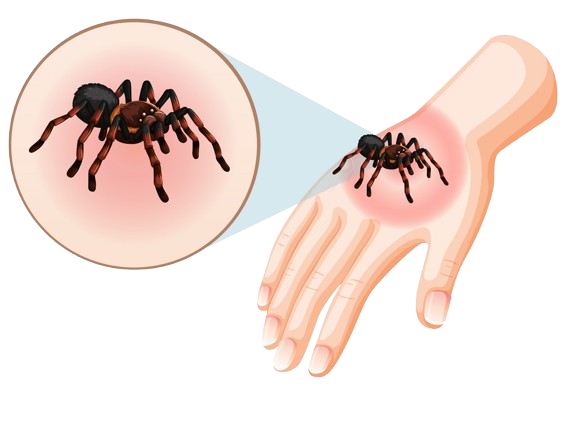
Stings & Bites
Stings and bites are injuries caused by insects or animals, often leading to pain, swelling, or allergic reactions.
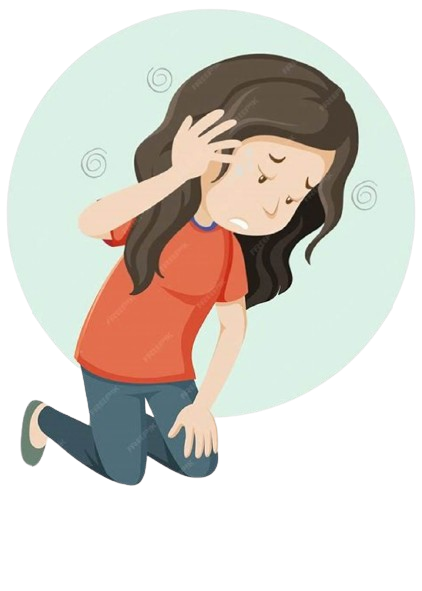
Fainting
Fainting is a brief unconsciousness due to reduced blood flow to the brain.
Stings and bites occur when insects or animals inject venom or bite the skin, causing pain, swelling, or itching. Most are harmless but can lead to allergic reactions or infections in some cases.
Fainting happens when blood flow to the brain drops, leading to temporary unconsciousness. It’s usually brief and not serious, but frequent episodes may need medical attention.
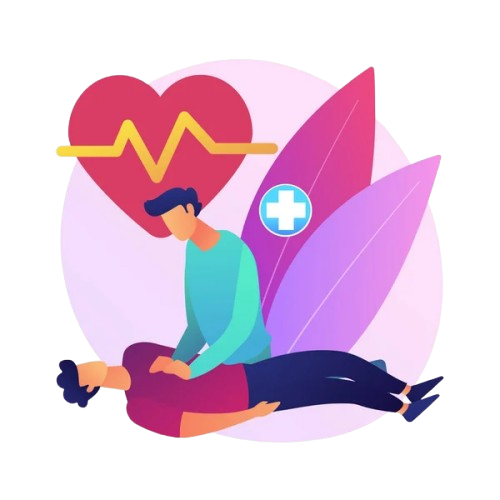
CPR
CPR is an emergency procedure to restore breathing and circulation in cardiac or respiratory arrest.
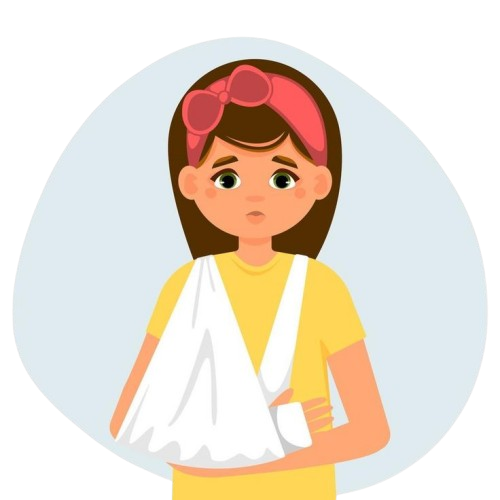
Fracture
A fracture is a break or crack in a bone caused by force or stress.
CPR, or Cardiopulmonary Resuscitation, is an emergency procedure used when someone's heart stops beating or they stop breathing. It involves chest compressions and sometimes rescue breaths to maintain blood and oxygen flow to vital organs until professional help arrives. It's a critical skill that can save lives during cardiac or respiratory emergencies.
-
1. CPR for an adult
2. CPR for a child
3. CPR for an infant
A fracture is a break, crack, or chip in a bone. It can happen due to a fall, accident, or direct blow. Some fractures are small and simple, while others can be serious and painful. Knowing how to handle a fracture quickly and safely can make a big difference in healing and recovery.
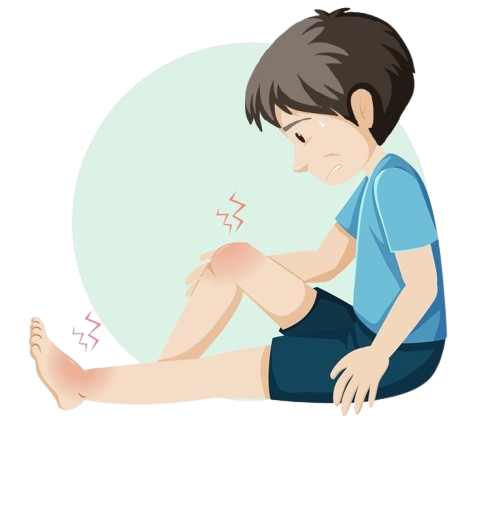
Sprain & Strain
Sprains and strains are injuries to ligaments or muscles caused by overstretching or tearing.
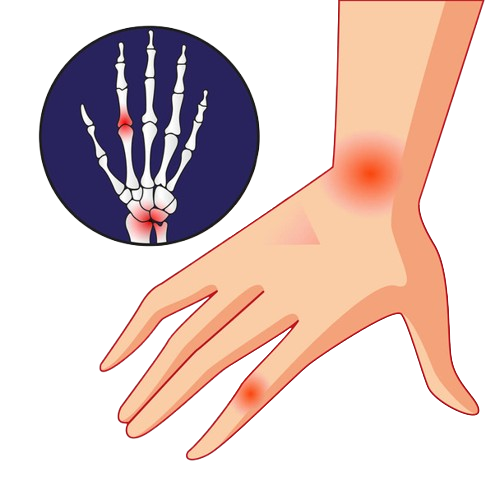
Dislocation
Dislocation is an injury where a bone is forcibly moved out of its normal joint position.
Strains and sprains are soft tissue injuries that affect muscles, tendons, or ligaments. A strain is caused by overstretching or tearing a muscle or tendon, while a sprain happens when a ligament is stretched or torn, usually around joints like the ankle or wrist. These injuries are common in sports and can cause pain, swelling, and difficulty moving the affected area.
A dislocation happens when a bone is forced out of its normal position at a joint, often due to a fall, blow, or sudden twist. It commonly affects the shoulder, fingers, or jaw. Dislocations cause severe pain, swelling, and inability to move the joint. It requires urgent medical attention to put the bone back into place and avoid further damage.
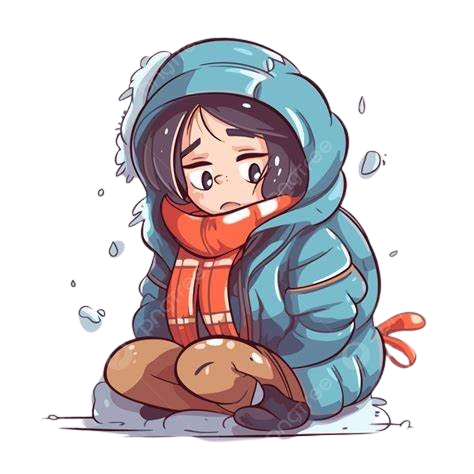
Hypothermia
Hypothermia is a dangerous condition where the body loses heat faster than it can produce, causing a drop in core temperature.
Poisoning
Poisoning is harm caused by ingesting, inhaling, or absorbing toxic substances into the body.
Hypothermia happens when the body loses heat faster than it can produce it, causing the body temperature to drop dangerously low — usually below 35°C (95°F). It’s a medical emergency that can happen in cold weather, wet clothes, or strong winds.
- 1. If outdoors:
2. If indoors:
Poisoning happens when a harmful substance is swallowed, inhaled, injected, or absorbed through the skin. It can be caused by chemicals, medicines, gases, spoiled food, or even some plants and insect bites.
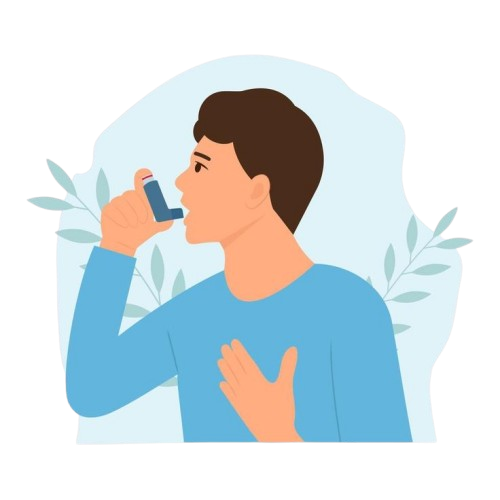
Asthma
Asthma is a chronic condition causing airway inflammation and difficulty in breathing.
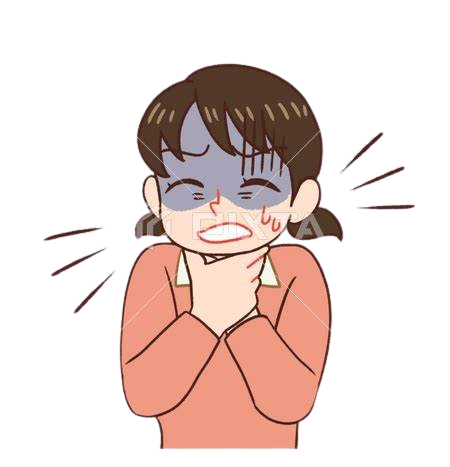
Choking
Choking is a blockage of the airway, preventing breathing and leading to oxygen deprivation.
Asthma is a chronic condition where the airways in the lungs become inflamed and narrow, causing symptoms like wheezing, shortness of breath, chest tightness, and coughing. It can be managed with medication and by avoiding triggers.
A piece of food or another object stuck in the throat can block the airway and cause muscle spasms. If the blockage is mild, the person may be able to clear it by coughing. However, if the blockage is severe, they won’t be able to speak, cough, or breathe, and they may pass out. If they lose consciousness, their throat muscles might relax, allowing for rescue breaths. Be ready to give rescue breaths and chest compressions if needed.
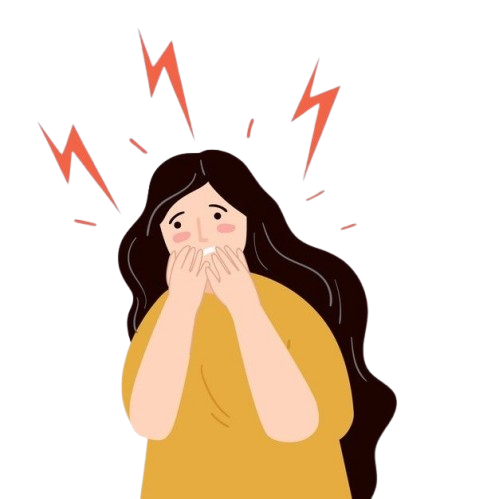
Panic Attack
A panic attack is a sudden episode of intense fear or discomfort, often with physical symptoms like rapid heartbeat and shortness of breath.
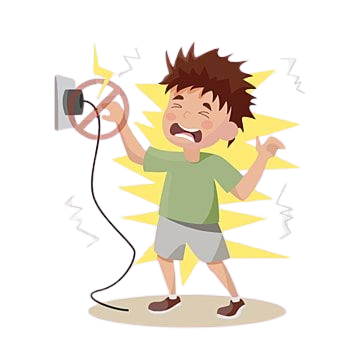
Electric Shock
Electric shock is an injury caused by electrical current passing through the body, potentially disrupting vital functions.
A panic attack is a sudden surge of intense fear with physical symptoms like rapid heartbeat, difficulty breathing, and dizziness. It’s not dangerous but can feel overwhelming.
An electric shock occurs when an electrical current passes through the body, potentially causing burns, muscle spasms, or organ damage. Severity depends on the voltage and duration of contact. It can range from minor discomfort to life-threatening injuries.